Course project · XR design reflection · 2026
VR Shooting Range
A Unity prototype with two range conditions, used to reflect on the relationship between visual complexity, movement and comfort in VR.
Project overview
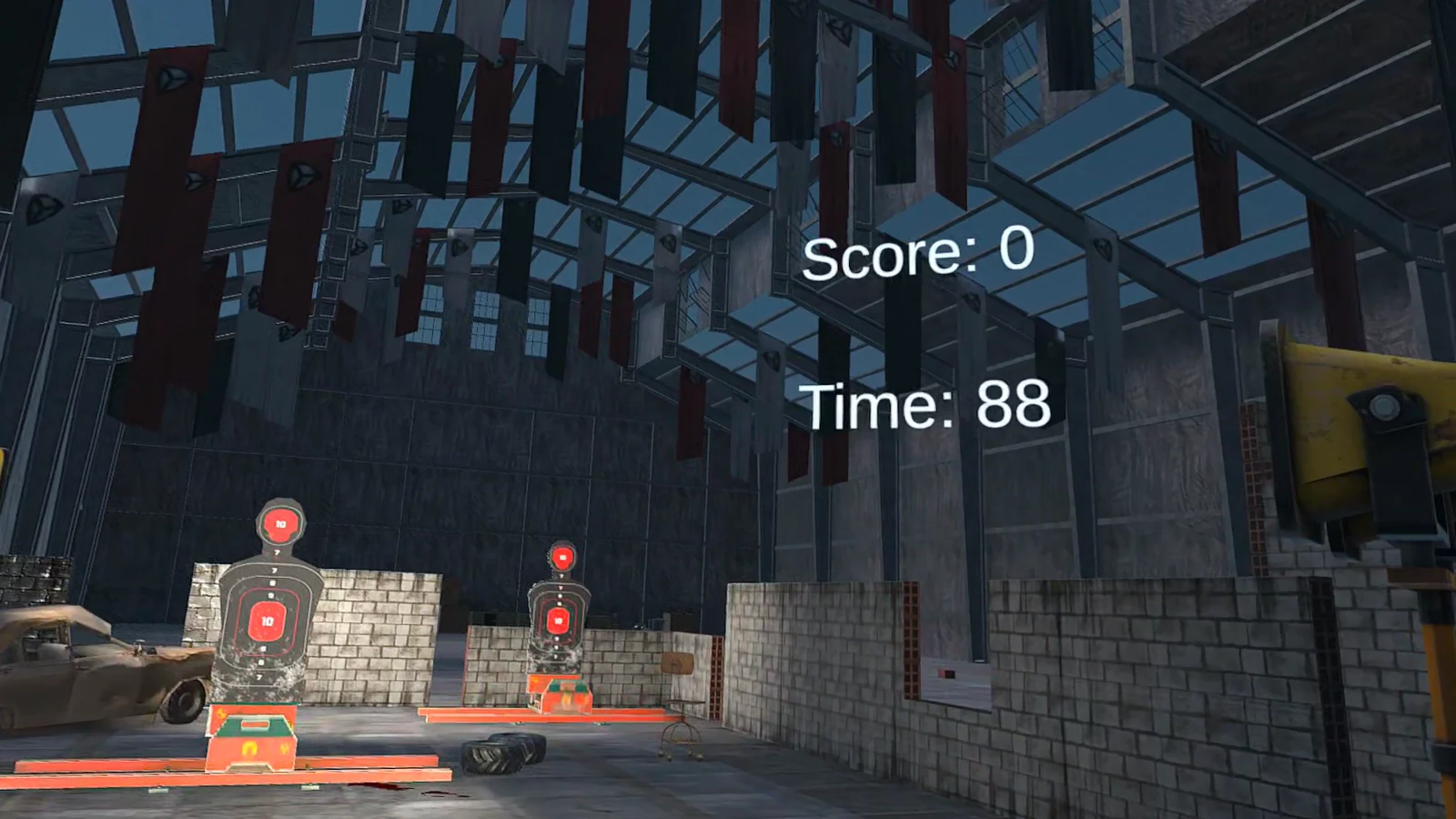
This coursework prototype put two modes in the same virtual range. I wanted to explore how environmental changes shaped where players directed their attention and how their choice of locomotion changed the experience.
My role
I kept smooth movement from the course’s XR framework and added a toggleable teleport option. I wrote the course reflection, comparing locomotion comfort, presence and fatigue across the two environments.
Two range modes
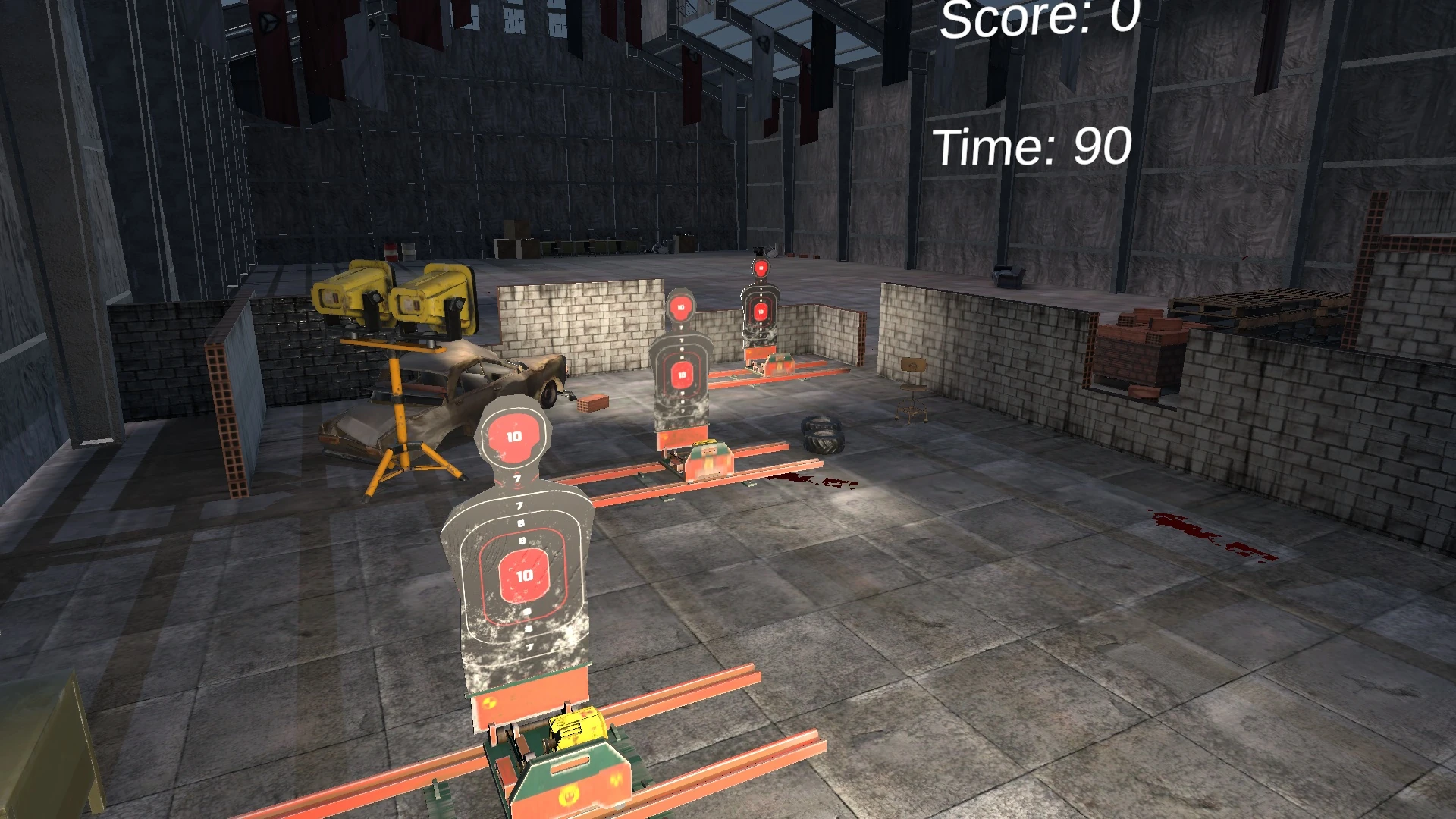
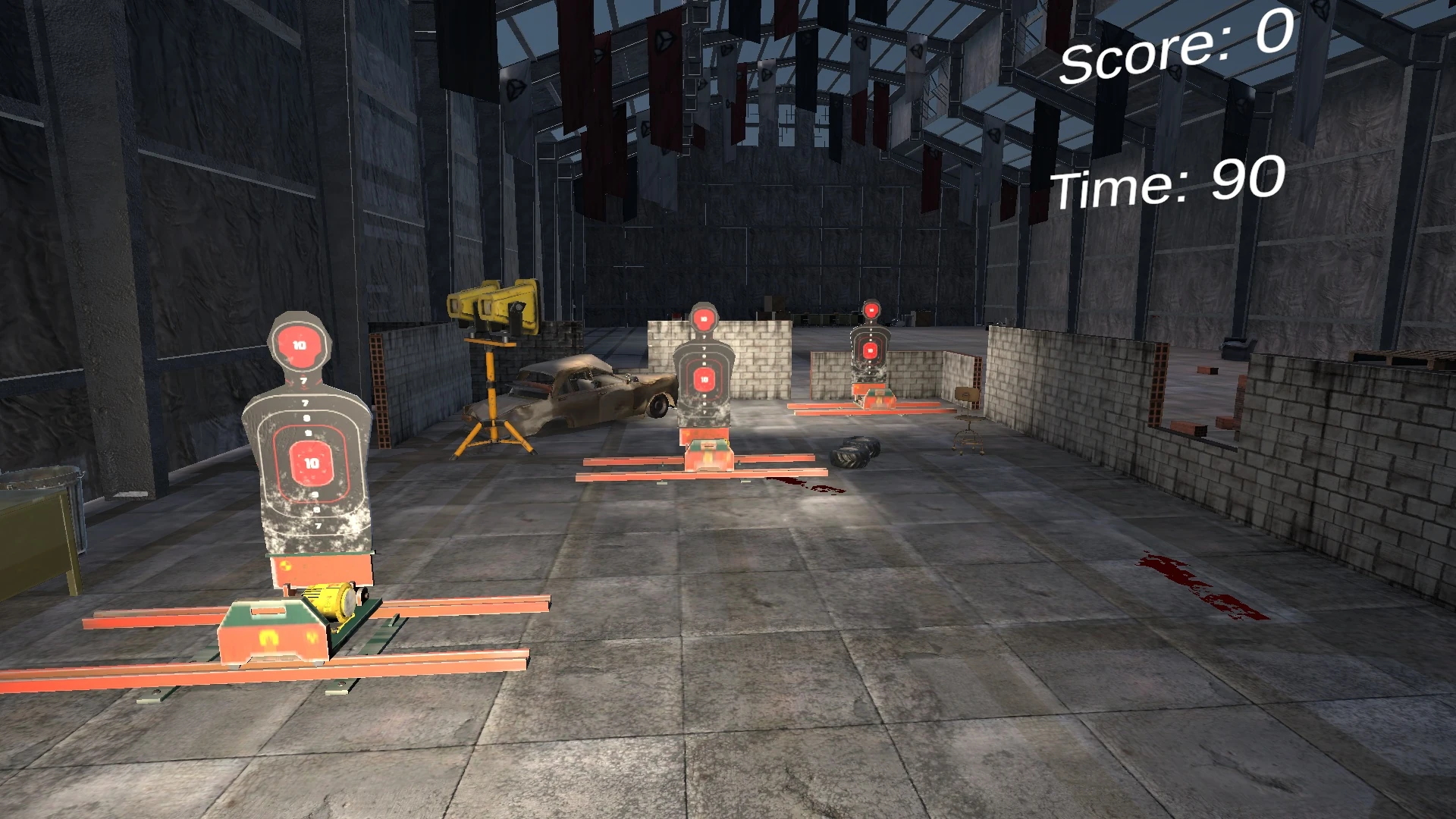
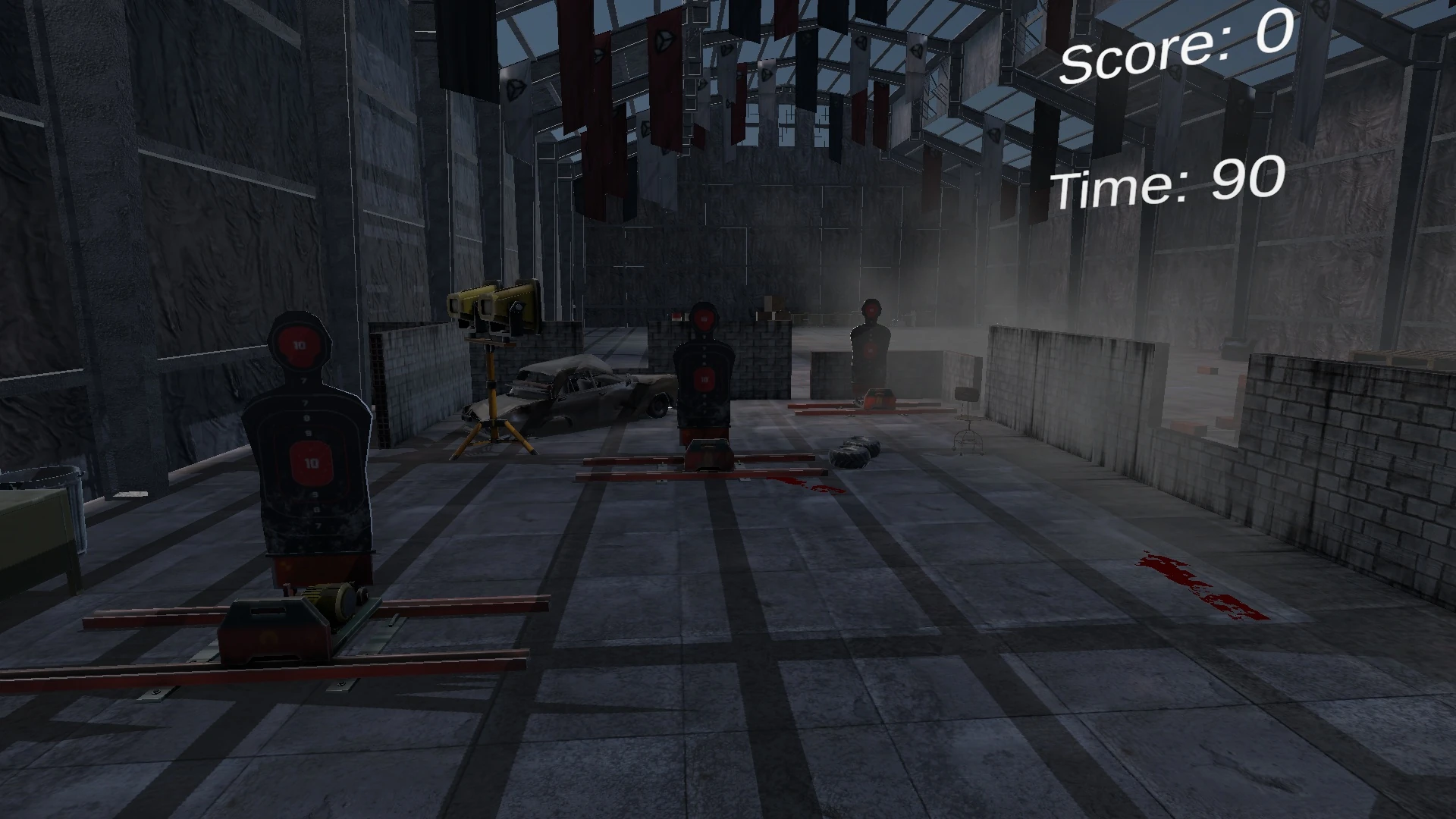
Both modes share the same range. The captures use the same camera position and the project’s mode settings to make lighting and smoke comparable. In Dynamic Mode, components in the scene control target movement along paths.
Interaction and feedback
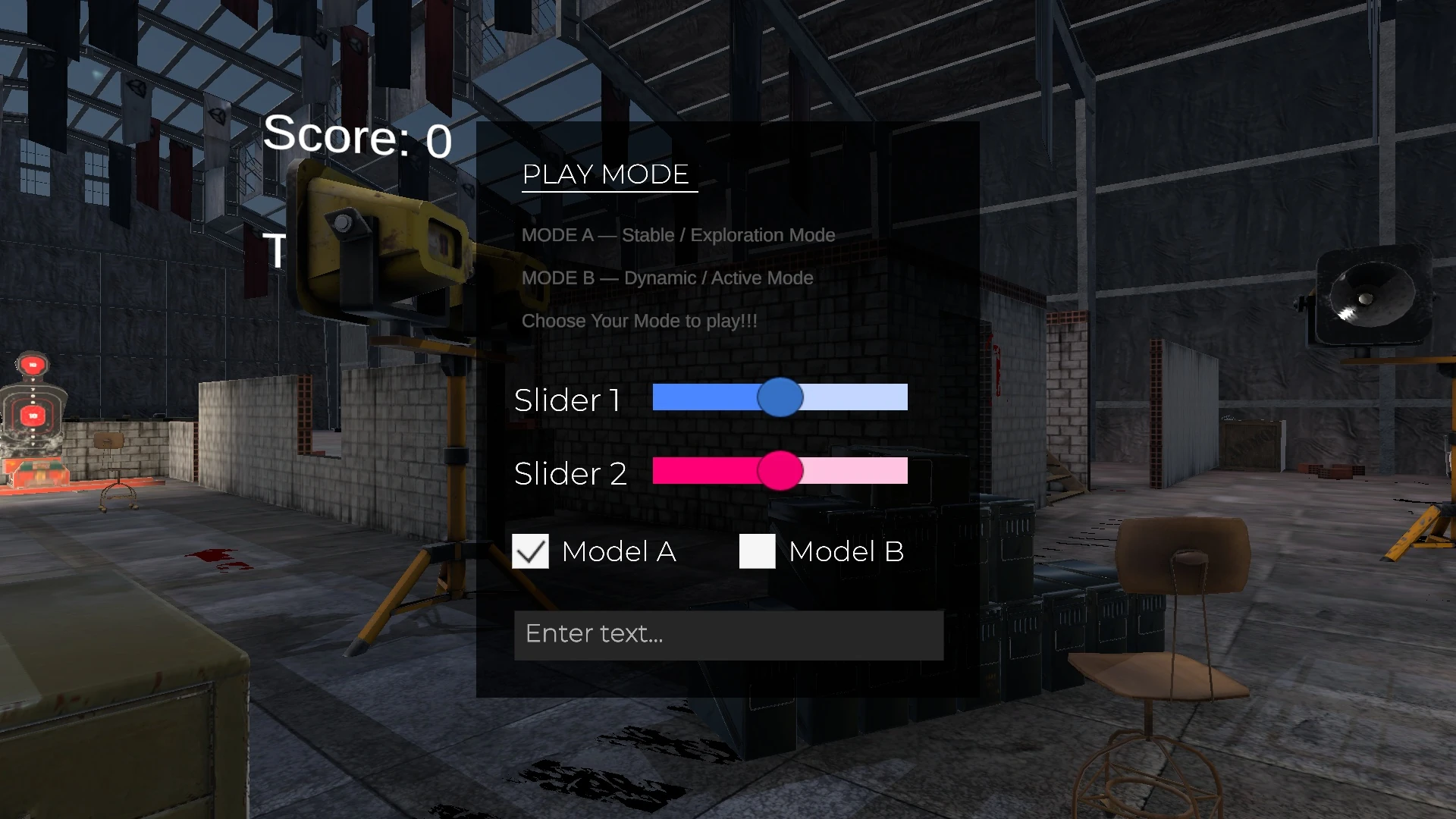
The player selects a mode from an in-world panel. The headset recording shows the score and timer resetting when Static Mode ends, then the countdown starting again in Dynamic Mode. Both mode switches are wired to the scoring logic in the project.
The course report also discusses the two ways of navigating, how spatial audio helps convey direction, and where haptic feedback could be clearer.
Design reflection
In my course reflection I recorded discomfort with smooth movement, especially when the scene itself was changing. Lower light, moving targets and smoke gave the player more to keep track of.
In the next iteration I would make teleportation the default and let players opt in to smooth movement.
Credits
The prototype uses the course starter project and the BNG XR Interaction Framework. The video uses headset footage from the project. The A/B comparison and panel stills come from the Unity project. The design observations are drawn from the course reflection.